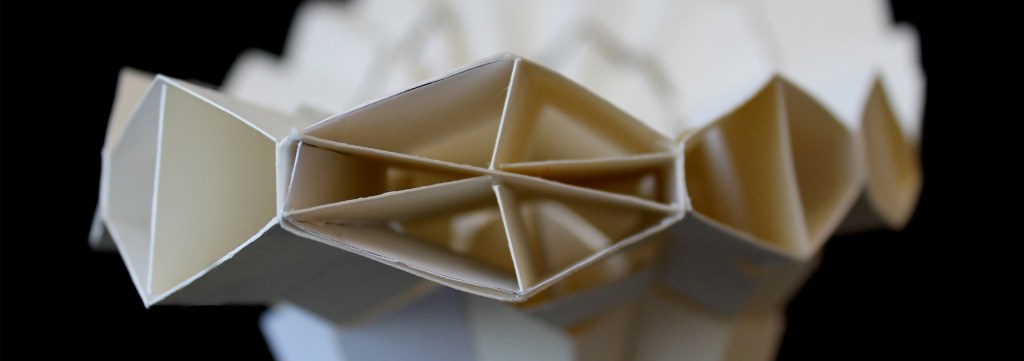
ARCHITECTURAL BIOMIMETICS
Daniel Locatelli, Ryan Daley, Sergio Rosas (Architecture students)
Anand Shah, TzuYing Chen (Structural engineering students)
Benjamin Hagemann, Max Mischke (Biology students)
The project was developed as a part of seminar subject Architectural Biomimetics at ITECH course, University of Stuttgart. Stony corals (Scleractinia) are studied as a biological role model to abstract architectural concepts. They live in colonies and build up reefs in shallow tropical oceans. Polyps are individual coral animals, which secretes calcium carbonate and thereby creates the exoskeleton for polyp, called corallite. Polyps are able to retract themselves into the corallites in order to be protected. In summary, it can be stated that the single skeletons directly protect the polyps; then the polyps grow in colonies and finally these colonies are needed to build large wave resistant reefs.
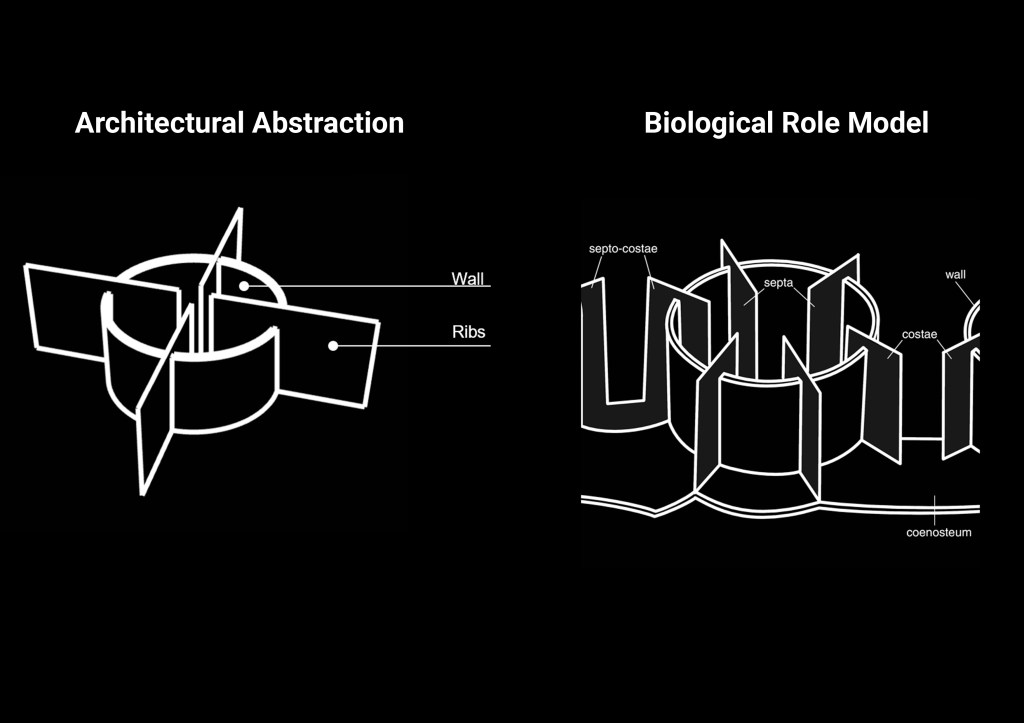
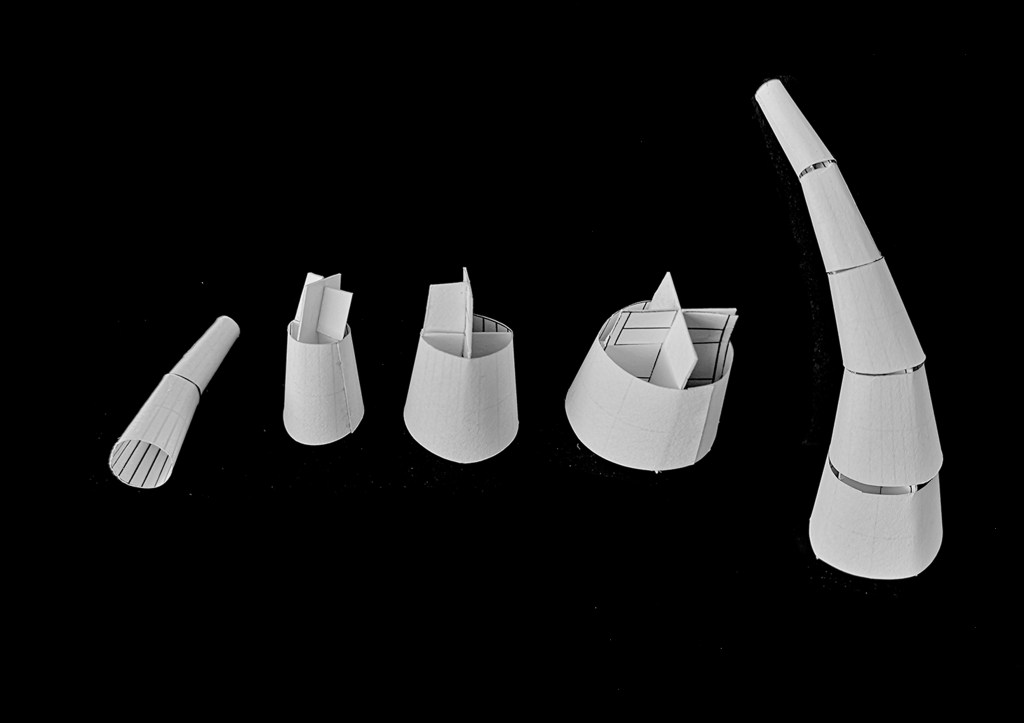
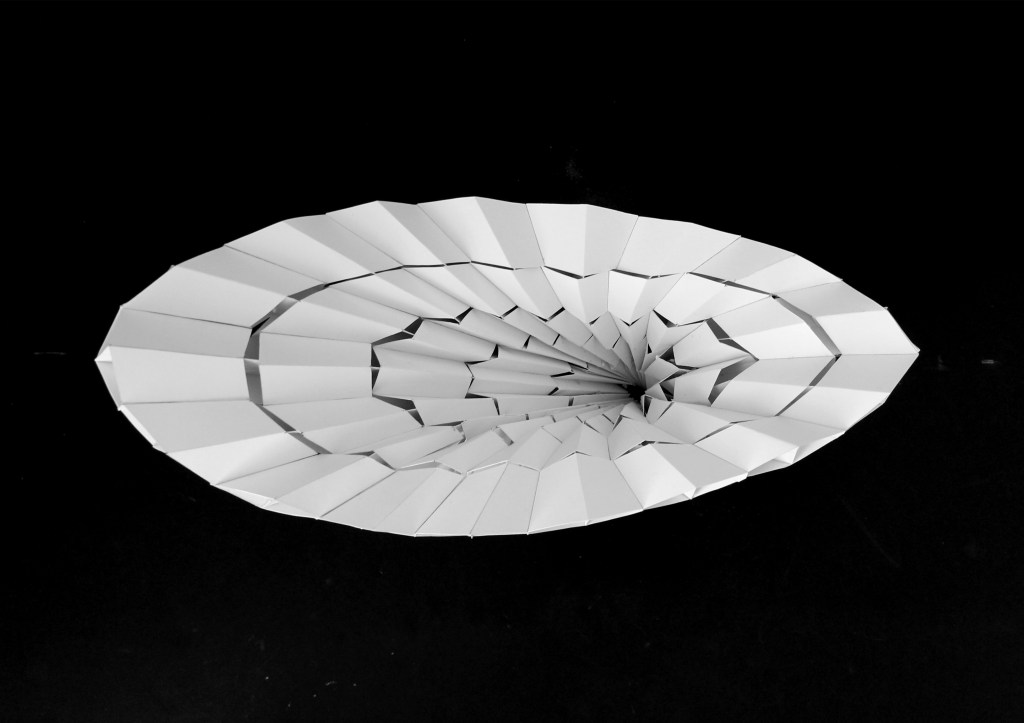
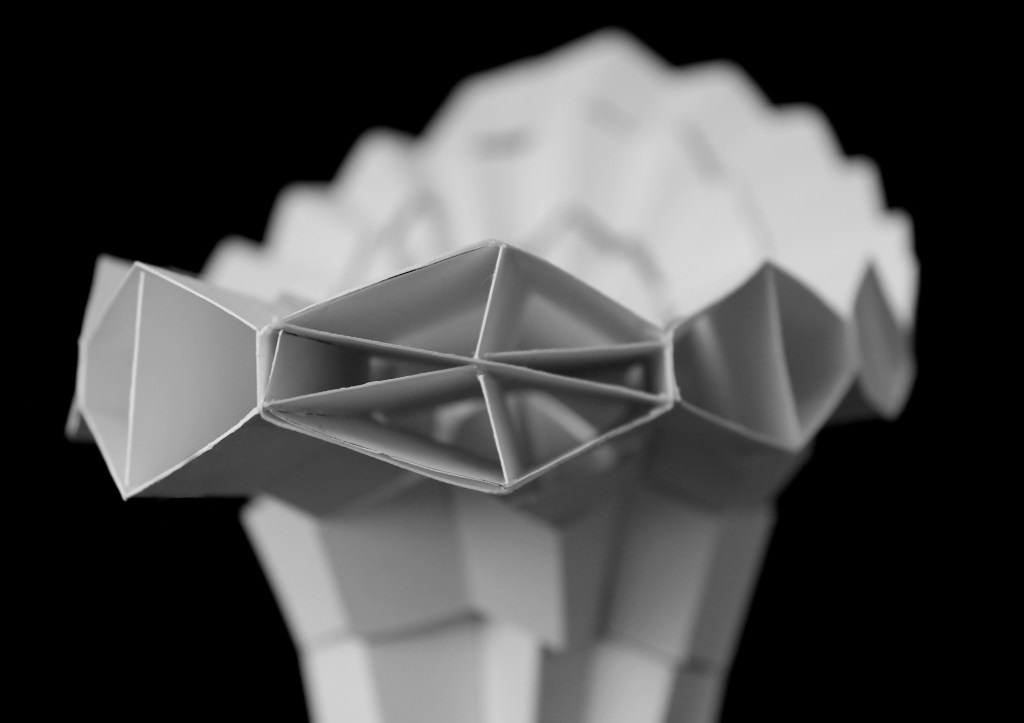
In order to abstract architectural concepts from the coral biology, the coral was studied in a bottom-up manner. The corals achieve varied morphologies with small variations to the same unit structure. Our biomimetic research was driven by the curiosity to figure out ways to abstract those principals and bring them into the architectural realm. The Corallite was conceptually simplified into 2 major components: the Septa and Epitheca. The Epitheca is a calcium wall which provides structural rigidity to the whole global form, whereas the septa are the non-structural ribs which are predominantly used as a nutrient channel. The architectural abstraction reimagines the two basic biological components as two basics architectural elements: a module and a connection system. These two components can be reiterated with small variations to produce a myriad of morphologies.


 Anand Shah